What are SaaS metrics

Emily Baldwin
Updated on April 09, 2026
SaaS (software-as-a-service) metrics are benchmarks that companies measure in order to establish steady growth. Like traditional KPIs, SaaS metrics help businesses gauge the success of their organization and effectively prepare themselves for a stable economic future.
What are the 5 most important metrics for SaaS companies?
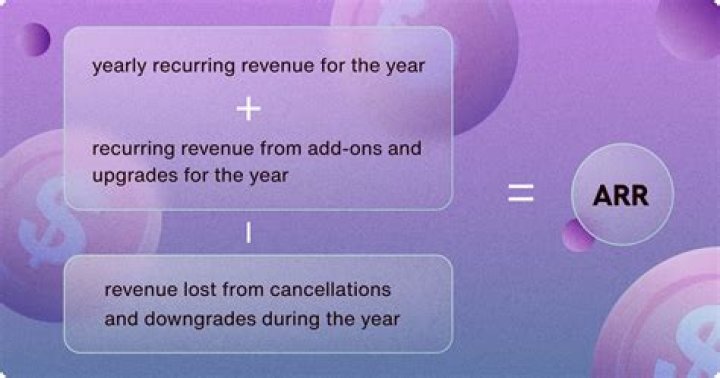
- SaaS Metrics #1: Annual Recurring Revenue (ARR) …
- SaaS Metrics #2: Monthly Recurring Revenue (MRR) …
- SaaS Metrics #3: Churn Rates. …
- SaaS Metrics #4: Customer Lifetime Value (CLV. …
- SaaS Metrics #5: Renewal Rate. …
- SaaS Metrics #6: Revenue Retention.
What are SaaS financial metrics?
Monthly Recurring Revenue (MRR) and Annual Recurring Revenue (ARR) are two financial metrics that will help you predict your SaaS company’s revenue. MRR helps you understand how your growth might look in the short term, while ARR gives you an idea of your long-term growth.
Which SaaS metrics are most important?
Activation rate. Activation is arguably the most important SaaS metric of them all. This is even more true in a product-led growth model, in which the in-app user experience becomes a driving force for growth.What is the rule of 40 in SaaS?
The popular metric says that a SaaS company’s growth rate when added to its free cash flow rate should equal 40 percent or higher. The rule has become a favorite of SaaS industry watchers, including boards and management teams, because it neatly distills a company’s operating performance into one number.
What is SaaS growth?
The SaaS market is currently growing by 18% each year. By the end of 2021, 99% of organizations will be using one or more SaaS solutions. Nearly 78% of small businesses have already invested in SaaS options. SaaS adoption in the healthcare industry grows at a rate of 20% per year.
What is a good SaaS growth rate?
For businesses older than 13 years, the typical growth rate is around 20% year-to-year. High growth is usually associated with high customer retention. The companies reach $1 million ARR approximately in 5 years.
How do you analyze SaaS?
Analyzing SaaS companies requires unique metrics and a differentiated point of view. The framework assesses SaaS businesses across five categories: the company’s product/solution, sales & marketing practices, revenue metrics, profitability and balance sheet. SaaS business models are well-positioned for future growth.What is the difference between MRR and NRR?
Net Revenue Retention (NRR) Rate is the percentage of recurring revenue retained from existing customers in a defined time period, including expansion revenue, downgrades, and cancels. … Net Monthly Recurring Revenue (MRR) Churn Rate is the percentage change in MRR due to expansions, cancellations and downgrades.
What are pirate metrics?Pirate metrics are a way to categorize and group together metrics depending on what aspect of the business you want to measure. The groupings are awareness, acquisition, activation, revenue, retention and referral or as a pirate would say “AAARRR.”
Article first time published onWhat is the rule of 50?
Stated simply, the Rule of 50 is governed by the principle that if the percentage of annual revenue growth plus earnings before interest, taxes, depreciation and amortization (EBITDA) as a percentage of revenue are equal to 50 or greater, the company is performing at an elite level; if it falls below this metric, some …
What is a good gross margin for SaaS?
As the customer base matures and the company reaches scale, most SaaS companies should achieve gross margins in the 75%–80% range, depending on the level of professional services required to deploy the solutions.
What is profit margin for SaaS?
Gross Margin Benchmarks for SaaS businesses Based on our experience, a good benchmark is over 75%. Typically, most privately held SaaS businesses we work with have gross margins in the range of 70% to 85%. Anything below 70% begins to raise a red flag, requiring additional analysis.
Is there a SaaS index?
The Cornerstone Global Enterprise SaaS (CGES) Index comprises 30 top globally-listed enterprise software-as-a-service (SaaS) companies, like Zoom and Salesforce, and is a realtime index, tracking their performance on the global stock exchanges.
Why do SaaS companies fail?
Lack of a Market Most SaaS businesses fail because they are simply not solving any existing problem. Others may be solving a problem that users do not want solved. The barriers to developing an app are at an all-time low.
What is a good monthly growth rate for a SaaS startup?
In summary, most SaaS startups were able to reach an impressive monthly revenue and growth rate with little or no funding. On average, SaaS startups were making $58,000 per month when pitching to investors with a monthly growth rate of 50%.
What is ACV SaaS?
ACV, or annual contract value, is the total amount of revenue a contract has for a year. This metric is usually used by SaaS companies who have yearly or multi-year contracts. This number is usually an annual average and breaks down a total contract value (TCV) annually.
Can a retention rate be over 100?
As in the example, the net retention rate can be above 100% and is often referred to as Negative Churn. A rate above 110% is considered best-in-class.
What is NRR GRR?
The Net Retention Rate (NRR) and Gross Retention Rate(GRR) show retention in terms of revenue retained over a period of time whereas Customer retention Rate or Logo Retention Rate show retention in terms of the number of customers. Measuring both of these metrics will give a more balanced view of your retention.
How is LTV calculated SaaS?
One of the simplest ways to calculate LTV is to multiply the average revenue a customer generates over a given period of time (month or quarter) by the average length of contract. Another simple formula for LTV calculation is: LTV = ARPU / Revenue or Customer churn.
How do you calculate SaaS unit in economics?
The easiest way to calculate the unit economics for your company is to find the revenue per customer and divide it by the costs associated with that customer.
What is your North Star metric?
A North Star metric is the one measurement that’s most predictive of a company’s long-term success. To qualify as a “North Star,” a metric must do three things: lead to revenue, reflect customer value, and measure progress.
Why is pirate metrics called so?
Pirate Metrics were invented by Dave McClure in 2007. AARRR, also known as Pirate Metrics, stands for acquisition, activation, retention, referral, and revenue.
What is activation metric?
The most basic and essential activation metric is “activation rate”—the rate at which your acquired customers become active customers by initiating an activation event. … Once you know how long your customers take to activate, you can start optimizing your marketing to bring this time down.
What is the 70/30 rule?
The 70/30 rule in finance allows us to spend, save, and invest. It’s simple. Divide the monthly take-home pay by 70% for monthly expenses, and 30% is subdivided into 20% savings (including debt), 10% to tithing, donation, investment, or retirement.
What is the 30 rule confidence?
In an episode of “Charisma on Command” by Charlie Houpert I learned of the 30% rule, which essentially goes as follows – When speaking, we give ourselves 30% of the time a listener would give us to fill a pause without it feeling uncomfortable. As you think, there’s a pause in speech. …
What does the Rule of 40 mean?
In recent years, the Rule of 40—the idea that a software company’s combined growth rate and profit margin should be greater than 40%—has gained traction as a high-level metric for software company success, especially in the realms of venture capital and growth equity.
Why is SaaS so attractive?
So what is it that makes SaaS so attractive to VCs? First and foremost, SaaS businesses provide predictable, recurring revenue. … SaaS startups can take on as many subscribers as they want with more or less the same fixed costs, potentially creating huge revenue.
How is SaaS margin calculated?
Your SaaS gross margin is simply total revenue minus cost of goods sold (COGS).
Why is SaaS valuable?
Because a SaaS company relies primarily on subscription-based revenue, the customer will likely turn into a renewing customer. Renewal rates over 90% are healthy and positive. However, churn is a more popular metric as it often is paired with automatic renewals (leading to a better valuation).
What is the cloud 100?
2016-2019 Benchmarks. Cloud 100 is the definitive ranking of the top 100 private cloud companies in the world; these businesses also serve as an industry benchmark and measure the strength of the private cloud market.